
Why Global Brands Are Flying Film Crews to Sri Lanka to Document Their Supply Chain
- Amrik Ratwatte
- Jun 9
- 7 min read

There's a growing trend among mid-to-large consumer brands — particularly in fashion, home goods, and speciality food — to send production crews to Sri Lanka not for a campaign, but to document where and how their products are made. What started as a response to consumer pressure has quietly become one of the most strategic brand-building investments in a modern marketer's playbook. And for brands whose supply chains already run through Sri Lanka, the question is no longer whether to do this — it's why they haven't done it already.
We have been producing video and photo content in Sri Lanka for international brands for years. Here's what we've seen, what's driving the shift, and what a production like this actually involves in practice.

Photo by Gabriel Weyand on Unsplash
1. The Transparency Imperative Has Reached the Factory Gate
Consumer trust in brand claims about sustainability and ethical production has eroded significantly over the last five years. Greenwashing scandals, documentary exposés, and the proliferation of investigative journalism on global supply chains have made audiences — and increasingly, regulators — deeply sceptical of unverified claims.
A PDF sustainability report and a stock photo of a smiling worker are no longer sufficient. They can, in some contexts, actively damage credibility.
In this environment, showing beats telling by an enormous margin. A brand that can put actual footage of its manufacturing conditions — real workers, real processes, real environments — in front of its audience is operating in a fundamentally different conversation from one that publishes aspirational copy about its values. Supply chain content has become a form of proof. And in a market where proof is scarce, it commands real attention.
This is what's driving global brands to invest in video production in Sri Lanka specifically: not just the quality of what gets made here, but the fact that it can be shown. The conditions, the skill, the people — they photograph and film well, in a way that supports rather than undermines the brand story.
2. Why Sri Lanka? The Manufacturing Credentials
Sri Lanka has developed significant manufacturing capability across several sectors that global consumer brands rely on: apparel and textiles, natural rubber and latex products, gemstones and jewellery, premium tea, ceramics, and home goods. The country's workforce is highly skilled, English-literate at the management level, and operating within a framework of labour law that compares favourably with most regional alternatives.
For brands whose supply chain narrative is built on 'made with care' or 'ethically produced', Sri Lanka delivers on those claims in ways that are genuinely filmable. This is something that becomes immediately apparent when you bring a camera here — the environment, the people, and the craft all contribute to footage that feels worth the journey. Photography and videography in Sri Lanka, done with real documentary intent, produce content that stands apart from what's being produced in lower-cost manufacturing markets.
🎬 FROM OUR TEAM We worked with a European apparel brand that had been manufacturing in Sri Lanka for eight years and had never produced a single piece of supply chain content. Their sustainability page was a wall of text and a bar chart. In three shoot days across two factories and a tea estate, we built them enough video and photo content for two years of campaigns, a full website refresh, a press kit, and their first real social media programme around their sourcing story. The footage was not difficult to find. It was all already there — we just brought the cameras.

3. What Makes Sri Lanka Compelling on Camera
Beyond the manufacturing story, Sri Lanka offers a visual backdrop that few other sourcing countries can match. The light here is exceptional — soft, directional, and golden for much of the year, particularly in the early morning and late afternoon when outdoor scenes can look genuinely cinematic without any artificial lighting. The natural environments surrounding manufacturing zones — the hill country in Kandy and Nuwara Eliya, the coastline, the cultural triangle — give brands the option to weave a sense of place into their supply chain narrative in ways that a Bangladeshi or Chinese factory setting simply cannot offer.
This matters because supply chain content doesn't have to be purely functional. The best video and photo production in Sri Lanka weaves place, process, and people together into a complete story — one about origin, craft, and the specific character of where something is made. A film that opens on a misty tea estate, moves to a factory floor in full operation, and closes on the finished product in a retail context is telling a story with genuine emotional resonance. That resonance translates directly into brand value.
Our team at Clear has built location knowledge across Sri Lanka's key manufacturing regions — Colombo, the garment belt, the hill country, the gem-mining regions around Ratnapura — that allows us to match the visual environment to the specific story a brand needs to tell. This is what separates local production expertise from a crew flown in for a week.
4. The ROI of Supply Chain Content
The business case for this type of video and photo production has become clearer as brands track its downstream performance. Supply chain content consistently outperforms standard advertising in earned media — it gets shared by people who would never share a product ad, picked up by trade and consumer journalists covering sustainability, and used by wholesale buyers in their own customer communications. It performs strongly in B2B contexts: buyers at retail chains and department stores respond to it in ways they do not respond to commercial advertising.
Supply chain content also supports premium pricing by anchoring the product's value in craft and origin rather than in marketing claims. And it has a significantly longer shelf life than campaign-specific advertising — brands typically use these films for two to four years across multiple channels, long after their seasonal content has been retired. The cost-per-impression across that lifespan makes production in Sri Lanka one of the most efficient content investments most brands will ever make.

Photo by Anthony Lim on Unsplash
5. What a Typical Production Trip Looks Like
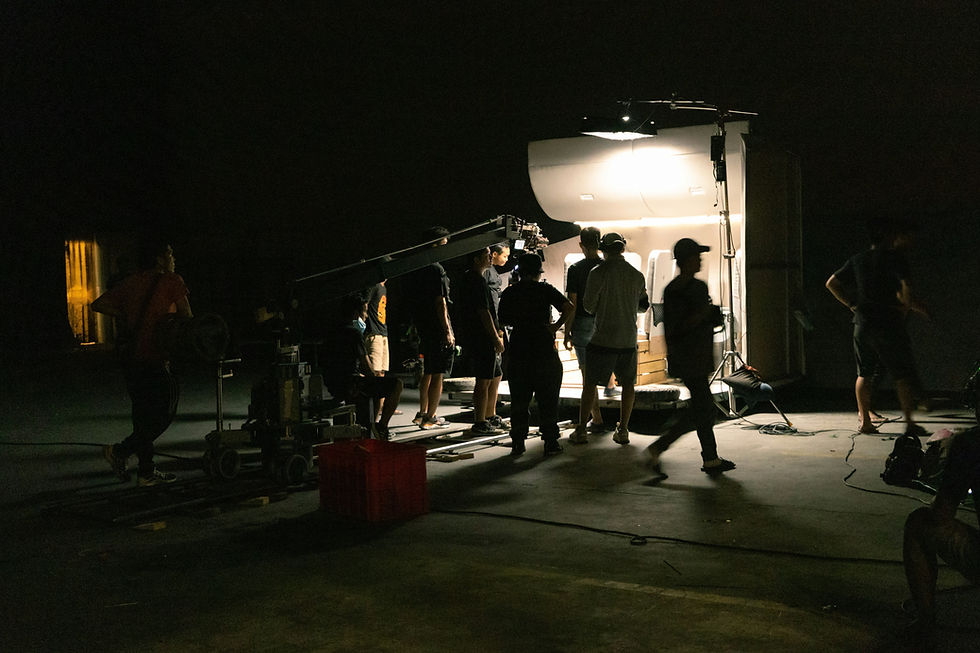
Most supply chain productions we run in Sri Lanka span three to five shooting days, depending on the number of locations and the complexity of the brief. A well-structured production covers: factory floor filming across key production stages, worker interviews conducted in native language with professional interpretation, management interviews in English, B-roll of the surrounding environment and community, and a photography programme running parallel to the video team to maximise the asset output from each location.
Brands typically arrive with a small internal team — a marketing lead and sometimes a creative director — and work with our crew for equipment, logistics, location management, and on-the-ground coordination. This hybrid model significantly reduces costs compared to flying a full production crew from the brand's home country, while maintaining complete creative control over the brief and the output. Equipment is sourced locally. Location permits are handled without translation friction. And the production schedule is built around the real rhythms of the factory — not a visitor's misunderstanding of them.
The video and photo output from a typical five-day production in Sri Lanka — properly planned and executed by a team that knows the environment — is substantial: a hero documentary of three to five minutes, three to five short-form social cuts, sixty to one hundred photography stills across factory, environment, and worker portrait categories, and raw interview content that can be cut into formats not yet imagined.
6. The Advantage of Working With a Local Production Partner
The brands getting the best results from supply chain productions in Sri Lanka are those working with production partners who understand both the local environment and the international content brief. This specific combination — knowledge of Sri Lanka's manufacturing landscape, cultural fluency with factory workers and management, and the technical and creative capability to deliver to global brand standards — is what we have built at Clear.
A local video and photo production team in Sri Lanka brings practical advantages that a visiting crew simply cannot replicate: knowledge of which locations work in which light, relationships with factory management across industries, the ability to direct workers and conduct interviews in Sinhala or Tamil, and a production workflow adapted to Sri Lanka's logistical realities. These advantages translate directly into better content, faster turnarounds, and lower costs.
7. The Competitive Advantage of Moving First
In many sectors of manufacturing in Sri Lanka, supply chain content is still genuinely rare. The brands investing in it now — before it becomes a category standard — will define the visual language of ethical manufacturing in their space. That is a meaningful first-mover advantage, and it compounds: the second time you produce content here, you are building on a visual identity you have already established.
The question for marketing and sourcing teams is not whether to commission this content eventually. It is whether to do it now, when the story still feels original, and the field is uncrowded, or later, when every competitor has made the same trip, hired the same type of crew, and produced content that looks and sounds like yours.

Photo by Haris Illahi on Unsplash
The Camera Is Already There — You Just Need to Use It
Global brands manufacturing in Sri Lanka are sitting on a storytelling asset of real value. The factories are there. The workers are there. The landscape is there. What's been missing — for most brands — is the production infrastructure to capture it properly and the strategic conviction to make it a priority. Both of those things are now available. The question is simply whether you're ready to make the trip.
Feel free to reach out to us, to see how we can help you with your photography in Sri Lanka and videography-related content requirements. Clear Sri Lanka is a well-known Video Production house that provides Commercial Production services.


Comments