
Employee Branding Videos in Sri Lanka: What Works, What doesn't, and How to Get it Done
- Amrik Ratwatte
- 10 hours ago
- 6 min read

Employee branding videos are no longer a nice-to-have for Sri Lankan companies. With talent competition heating up across BPO, IT, banking, manufacturing, and hospitality, candidates are checking your career page, LinkedIn, and Glassdoor before they apply.
A well-made employee branding video tells them, in under two minutes, what it actually feels like to work at your company.
For global companies with offices here, it is also one of the most effective tools for recruitment into Sri Lanka-based roles — and for showing international teams the quality of talent operating out of Colombo.
Check out our work with some of the biggest Sri Lankan brands at clear.lk/work
But many companies still produce videos that feel like internal HR slideshows in motion. They cost a lot, get a few hundred LinkedIn views, and quietly disappear. This guide covers what actually works in the Sri Lankan market, what to avoid, and how to get a video produced — through a local production team in Sri Lanka — without burning your annual employer-branding budget on a single shoot.
1. Lead with real people, not the CEO
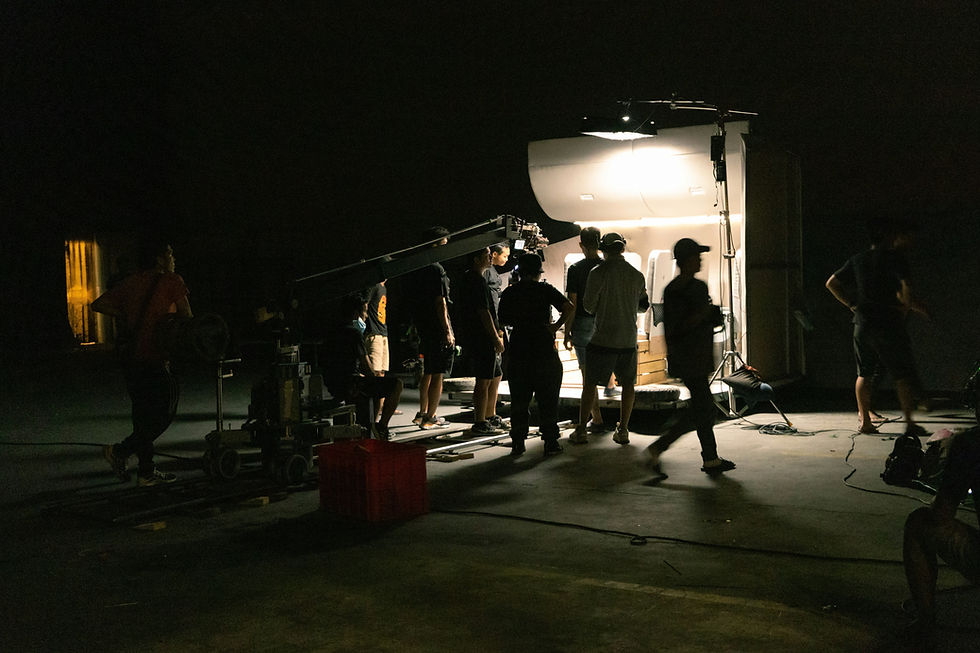
The single biggest mistake in Sri Lankan employer branding content is opening with the CEO welcoming you to the company. Candidates skip it. They want to hear from people who do the job they're applying for — the software engineer, the merchandiser, the floor supervisor, the customer service lead.
Reserve the CEO for a thirty-second cameo near the end, if at all. Lead with the people who represent the day-to-day.

Photo by Sable Flow on Unsplash
🎬 FROM OUR TEAM When we're casting for employee branding content, we don't ask HR to put out a volunteer call. We ask managers to nominate the people who are most engaged and can talk about their work without thinking too hard. On a recent shoot for a Colombo-based tech company, the strongest on-camera subject turned out to be a mid-level QA engineer who nobody had considered — she was specific, funny, and completely unperformed. That interview ran almost uncut.
2. Show the actual office, not a staged version of it
Candidates are very good at spotting a staged shot. The pristine boardroom, the suspiciously empty open-plan office, the perfectly arranged coffee mugs — all of it reads as marketing rather than reality.
Film during normal working hours. Capture the canteen at lunch. Get the noise. The footage will feel authentic, which is exactly what builds trust with applicants.
Our production teams in Sri Lanka are briefed to observe first, direct second — spending the first 30 minutes on location without the camera rolling, so the office returns to its natural rhythm before we capture it.
3. Keep it under two minutes
On LinkedIn, retention drops sharply after the ninety-second mark. On Instagram and TikTok, you're competing with content that's optimised for thirty-second windows. A five-minute corporate film will sit unwatched on YouTube, no matter how beautiful it looks.
Aim for a flagship video around 90 to 120 seconds, then cut three or four shorter pieces — 15 to 30 seconds each — for social. The same shoot, multiple deliverables. This is a standard output structure we at Clear use for employer brand work — brief for the full asset list before the crew arrives.
4. Write the questions, not the answers
Scripted testimonials are the death of employer branding. The moment an employee starts reciting lines about how the company is like a family, the video loses every viewer.
Brief the interviewer with open questions — what surprised you when you joined, what does your manager actually do well, what's something you wish you'd known on day one. Then let people answer in their own words and edit ruthlessly.
🎬 FROM OUR TEAM We run a twenty-minute pre-shoot call with every interview subject before the camera is even on location. We're not rehearsing — we're listening. By the end of that call, we know what they're proud of, what they'd tell a friend, and where the real story is. On shoot day, the interviewer already knows which thread to pull. It changes the quality of the answers completely, and it's one of the things that separates a production team in Sri Lanka that does this regularly from one that doesn't.
5. Sound matters more than picture
An office interview shot on a phone with a decent lapel mic will outperform a cinema-camera shoot with bad audio every single time. If you're cutting corners, cut them on the camera, never on sound.
Lavalier mics, a quiet meeting room, and a sound recordist who watches the levels are non-negotiable. A muffled or echoey video signals carelessness, and candidates assume that carries into how the company is run.
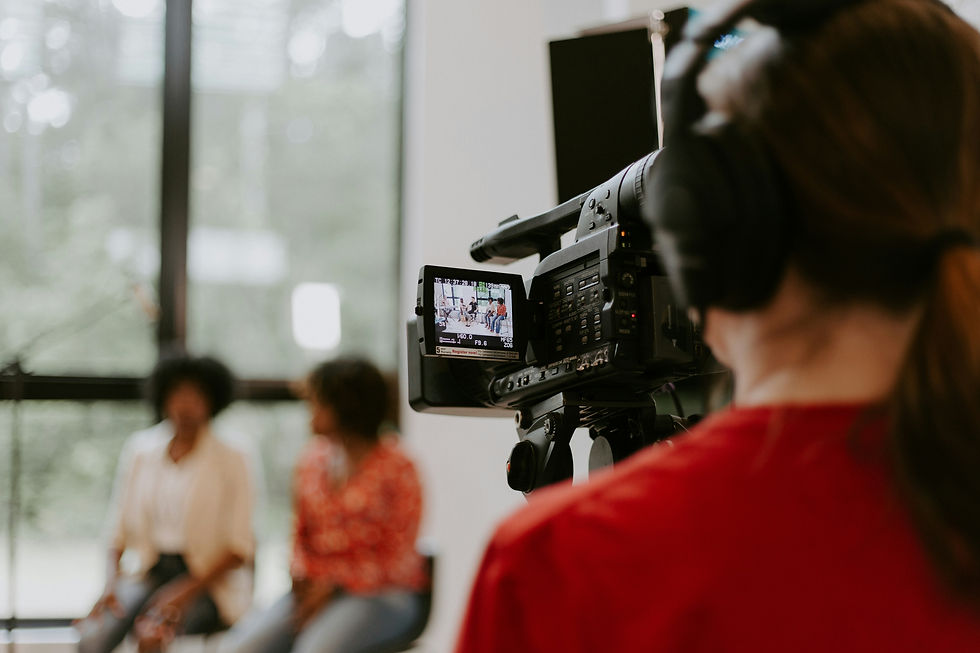
Photo by Samantha Borges on Unsplash
6. Use Sinhala, Tamil, and English where it makes sense
If you employ people across language groups, your video should reflect that. Letting a Sinhala-speaking employee answer in Sinhala with subtitles, and a Tamil-speaking employee answer in Tamil, sends a much stronger inclusion signal than a single all-English script.
It also widens your candidate reach significantly. Some of the best engineering talent in Sri Lanka is more comfortable in their first language during interviews, and you'll get richer answers as a result.
Production teams in Sri Lanka with genuine language capability — not just English-only crews — make a material difference to the quality of these moments on camera.
7. Capture specific moments, not generic 'culture'
Avoid the montage of laughter, group photos, and high-fives. Every company has those. They tell candidates nothing.
Film the actual rituals that make your company different. The Friday demo session. The merch sample review. The morning huddle on the production floor. Specificity is what makes the video memorable — and what makes a candidate think this is where I want to work.
🎬 FROM OUR TEAM One of the most memorable pieces of employer branding photography and videography we've done in Sri Lanka was for an apparel company. The brief was standard — show the culture, show the people. But during our pre-shoot walkthrough, we found a team that plays carrom at lunch every day without fail. We built ten minutes of the shoot around that. The carrom footage became the most-shared clip from the entire video. Nobody had thought to include it in the original brief because it seemed too casual. Casual is exactly what it needed to be.
8. Plan for two-shoot output, not one
Most companies commission a video, use it for six months, and then realise it looks dated. A better approach is to plan for two shoots a year — a major flagship piece and a shorter refresh — and treat employer branding video as an ongoing channel rather than a one-time deliverable.
The cost per video drops significantly when you structure it this way, and your career page stays fresh. Production in Sri Lanka is cost-efficient enough to make this model viable for companies of most sizes.
9. Get sign-off before, not after
The most expensive part of any corporate shoot is reshooting.
Lock down the script outline, the interview questions, and the list of employees featured before the crew arrives. Get HR, legal, and the relevant department heads to approve in writing.
Surprises during edit reviews cost the most money. Surprises after delivery cost trust.
Photo by dlxmedia.hu on Unsplash
10. Measure something other than views
Views are a vanity metric. The numbers that actually matter for employer branding are application volume, time-to-hire, and offer acceptance rate.
Set a baseline before the video launches, then check the same metrics three and six months later. If a video doesn't move at least one of those needles, it isn't doing its job.
Employee branding video in Sri Lanka works when it stops trying to look like an advertisement and starts looking like an honest answer to the question 'what is it like to work here?'
The companies winning the talent race aren't necessarily the ones with the biggest video budgets — they're the ones whose videos sound and feel like real people. Keep the production lean, the people genuine, and the edit short. The rest takes care of itself.
Feel free to reach out to us, to see how we can help you with your photography in Sri Lanka and videography-related content requirements. Clear Sri Lanka is a well-known Video Production house that provides Commercial Production services.


Comments