
From Factory Floor to Feed: Creating Social Content Around Your Sri Lanka Operations
- Amrik Ratwatte
- Jun 23
- 7 min read

If your brand manufactures in Sri Lanka and your social channels aren't regularly featuring content from your operations there, you are leaving one of your most powerful content assets sitting completely unused.
Factory and operations content — when planned and shot correctly by a team that knows both the environment and the medium — is among the highest-performing content categories for brands in manufacturing, fashion, food, and consumer goods. The engagement numbers are not close.
This is a practical guide for brand marketing teams planning their first (or next) production shoot in Sri Lanka — written from the perspective of a team that has done this across multiple sectors, multiple production budgets, and multiple brand briefs.

Photo by Ricardo Gomez Angel on Unsplash
1. Your Factory is a Content Goldmine - Most Brands Don't Know It
Consumer audiences are deeply curious about how products are made.
'How it's made' content consistently drives high engagement across Instagram, TikTok, LinkedIn, and YouTube — and yet most brands with genuinely interesting manufacturing stories in Sri Lanka never tell them. They default to polished product imagery and seasonal campaign creative while sitting on video and photo content that would outperform both, at a fraction of the cost per impression.
Your Sri Lanka operations offer several distinct content angles that most brands have not yet explored: craft and skill, the human expertise that goes into each product, process transparency - what actually happens between raw material and finished good, origin and place - the landscape, culture, and community the product comes from, and ethics - the standards and conditions your brand holds itself to. Each of these is a content pillar capable of carrying a sustained programme of video and photo production in Sri Lanka.
The brands building the strongest operations content in 2026 are not producing more content overall. They are producing more intentionally — using their Sri Lanka factories as a source of material that advertising budgets cannot buy and competitors in other markets cannot replicate.
🎬 FROM OUR TEAM
We shot a two-day operations content programme for a home goods brand at their factory outside Colombo. The brief was deliberately open: show us what's interesting here. By the end of day one we had close-up footage of a finishing process that turned out to be unique to their supplier — a hand-polishing technique that had never been filmed or photographed before. That footage became the brand's best-performing social content of the year. It was right there on the factory floor. Nobody had ever thought to point a camera at it.

2. Planning Your Shoot for Multiple Formats From Day One
The most common mistake in operations content shoots is planning for one format and ending up with footage that doesn't work for others. This typically happens when the brief is written by an internal communications team and handed to a production company without a clear output list. The result is a beautifully shot horizontal hero film, and nothing that works on Instagram Reels.
Plan your shoot in terms of deliverables, not themes. The output list for a well-structured two-day video and photo production in Sri Lanka should include: a horizontal hero film (three to five minutes, for YouTube and website); a short-form horizontal cut (60–90 seconds, for LinkedIn and Facebook); vertical content (30–60 seconds, for Instagram Reels and TikTok); photography stills for editorial, e-commerce, and sustainability report use; and pull-quote graphics built from interview transcripts.
Briefing your production company on this list before the shoot — not after — changes the entire shooting plan. Scenes are blocked differently. Interviews are framed for both horizontal and vertical use. The photographer and video team coordinate their coverage. And the post-production budget is allocated correctly from the start, rather than being improvised when the edit request arrives.
3. The Hero / Hub / Hygiene Model Applied to Factory Content
If you are planning a sustained content programme around your Sri Lanka operations rather than a one-off shoot, the hero/hub/hygiene framework is the most useful planning tool available.
Your hero content is the big film — produced once or twice a year, high production value, wide distribution.
Your hub content is a regular series around your operations: a monthly 'process' video, a seasonal update from the factory floor, a worker spotlight series.
Your hygiene content is the always-on layer: phone-quality clips, quick behind-the-scenes moments, answers to common product questions.
A single well-planned video and photo production trip to Sri Lanka — briefed with the full framework in mind — can generate hero content for the year and hub content for six months. The key is designing the shoot for the series, not the single film.
Every setup should be asked: can this scene become a repeating format? Can this interview structure be used again next quarter with a different team member? The efficiency gains from this approach are significant for any brand running ongoing photography and videography in Sri Lanka.
4. Formats That Perform on Each Platform
Platform context matters enormously and changes the brief at every level — from the scenes you shoot to the interview questions you ask.
On Instagram Reels and TikTok, the first two seconds determine whether someone watches or swipes. Open with your most visually arresting shot — a detail close-up of a process, a reveal, a textural contrast — rather than a wide establishing shot.
On LinkedIn, longer-form process content and worker stories perform strongly with a professional audience of buyers, press, and industry peers.
On YouTube, documentary-style factory tours and origin films have strong search performance and high average view duration.
Pinterest and editorial placements respond strongly to high-quality photography from Sri Lanka manufacturing environments — particularly for home goods, apparel, and specialty food brands. If your production includes a photography team running alongside the video crew (and it should), ensure they are shooting specifically for these placements — not just grabbing behind-the-scenes stills between video setups.
The photography from a Sri Lankan production should be considered an equal deliverable to the video, not an afterthought.

Photo by Billy Freeman on Unsplash
5. Shooting Tips for Factory Environments in Sri Lanka
Sri Lanka factories present specific technical challenges that differ from standard commercial or advertising shoots — and that visiting crews without local experience often underestimate. Lighting is typically inconsistent: a mix of harsh overhead fluorescents, natural light flooding from high windows at certain times of day, and dark corners that need portable supplementary lighting. Brief your cinematographer to do a pre-shoot walkthrough and identify the best-lit zones and golden hours before the shoot day begins.
Sound is the other major challenge. Production noise in an active Sri Lankan garment or manufacturing facility is constant and complex — machines, ventilation, ambient conversation.
Plan interview setups in a designated quiet space: a break room, a supervisor's office, an external courtyard.
For floor footage, you are generally cutting to music or narration in post anyway, so ambient sound is less critical — but do capture clean room tone throughout the day for post-production flexibility.
Our standard approach to Sri Lanka factory shoots is to have a dedicated sound recordist separate from the camera team, which pays for itself many times over in post.
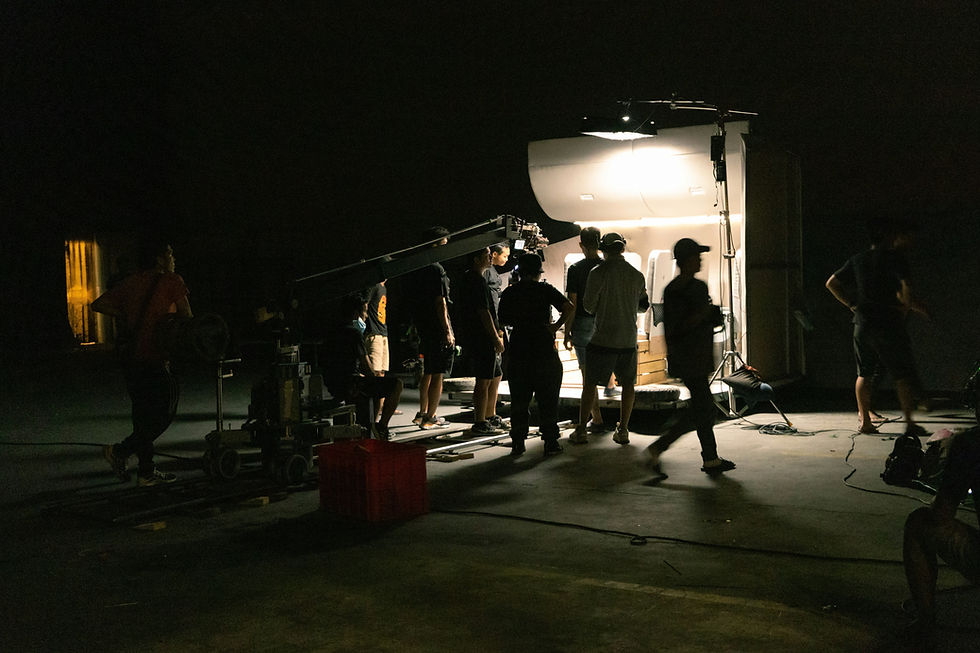
The best video and photo production in Sri Lanka factories is done with a small, mobile crew. A large presence disrupts the work environment and signals to workers that something unusual is happening. Two to three crew members moving quietly through the floor with well-chosen lenses will outperform a ten-person crew with a lighting rig every time.
6. Captioning, Accessibility, and Localisation
Social content from a Sri Lankan factory will almost certainly include interviews or narration in Sinhala or Tamil. Caption everything, across every platform and every format — both for accessibility and because a significant proportion of social video is watched without sound.
Use professional human transcription and translation rather than automated tools, particularly for worker interviews where accuracy and nuance carry weight. A poorly translated caption in a worker's voice can undermine an entire content piece.
Consider separately whether any of your content will be distributed within Sri Lanka itself — for recruitment, community relations, or domestic brand-building purposes. If so, adapt your captions, any on-screen text, and your distribution strategy accordingly. A piece of video and photo content that performs for a London audience may need meaningful adjustments in tone and reference to resonate with a Colombo audience. Our team at Clear bridges both contexts as part of our standard production approach.
7. Building a Content Calendar Around Your Sri Lanka Operations
Operations content works best as a sustained programme rather than a single activation — and Sri Lanka production schedules lend themselves naturally to a content calendar. Map your video and photography releases to the natural rhythms of your operations: new product or collection launches align with factory floor footage showing the production run; seasonal peaks and the approach to major retail periods are ideal moments for 'here's how we make it' content; worker spotlight stories can anchor a monthly series across the year.
If you visit Sri Lanka for quality audits or supplier meetings, brief someone on your team to capture mobile content on those trips. A 30-second walkthrough of a production floor, narrated in your sourcing director's voice, is worth more on social than a month of polished product photography. It signals presence, accountability, and a genuine relationship with the place where your product is made — which is exactly what transparency-hungry audiences want to see.

Photo by Rendy Novantino on Unsplash
Start Small, Build a System
You do not need a documentary budget on your first trip. A one-day shoot with a focused brief — five or six strong scenes from your Sri Lanka factory floor, two or three worker interviews, a coordinated photography run — gives you enough video and photo content to build a three-month social programme. Do that once, evaluate what performed well, refine the brief, and do it again. Within twelve months, you will have a content system rather than a one-off production.
The brands building the strongest operations content programmes from their Sri Lanka manufacturing operations are not the ones with the biggest production budgets. They are the ones who plan the most carefully, work with local production partners who know the environment, and treat every shoot as the foundation of the next one. Consistency and quality compound. Start the programme, and it builds from there.
Feel free to reach out to us, to see how we can help you with your photography in Sri Lanka and videography-related content requirements. Clear Sri Lanka is a well-known Video Production house that provides Commercial Production services.


Comments