
Do You Need a Film Permit to Shoot a Commercial in Sri Lanka?

The short answer is: it depends on where and what you're filming. Sri Lanka does not operate a single national film permit system where one approval unlocks the whole island. Instead, permission for commercial production in Sri Lanka sits across multiple authorities, each responsible for a specific category of location or activity. Understanding which authority you need, what they require, and how long they take is the practical starting point for any production in Sri Lanka.

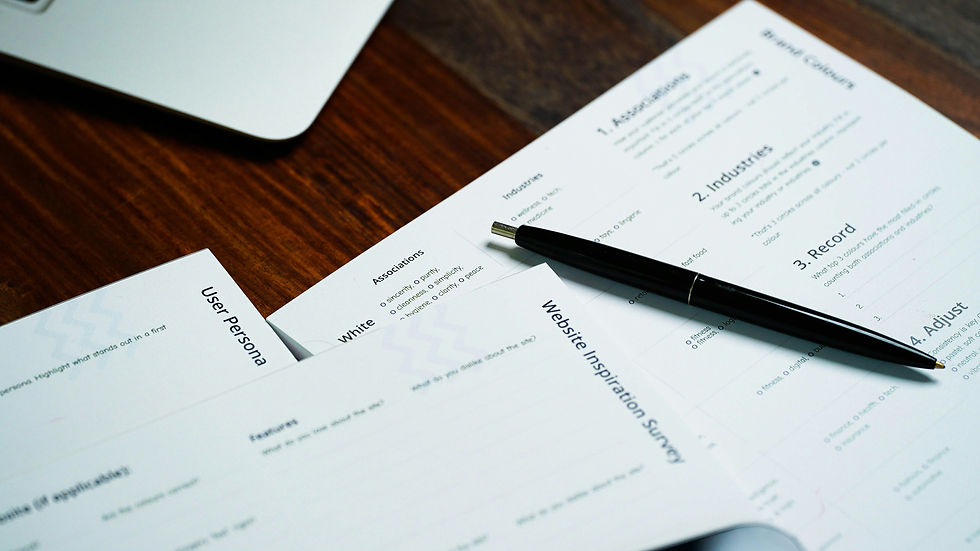
Photo by Romain Dancre on Unsplash
This guide covers the full 2026 picture: what requires a permit, what doesn't, which authority issues what, what it costs, and what the realistic timelines look like.
1. What Doesn't Require a Permit
There is a meaningful category of commercial photography and videography in Sri Lanka that can be conducted without formal permits. Private property shoots — offices, hotel interiors, private estates, and commercial premises — require only the landowner's permission, which is typically a written location agreement or a standard release. Most interior shoots for employer brand content, product photography, and corporate videography fall into this category.
Public roads and open urban spaces present a more nuanced picture. Low-impact shoots — a small crew with a camera and natural light, not blocking traffic or requiring access restrictions — are generally tolerated in most parts of Colombo and other cities without formal permits, provided the crew behaves professionally and is not causing obstruction. However, this tolerance is not a legal permission, and any shoot that involves equipment setup, traffic management, or a recognisable commercial production presence should be covered by the appropriate municipal approval.
The rule of thumb our team in Sri Lanka applies: if your crew and equipment are visible from the street, assume you need a permit. If you're inside a private property with a location agreement, you're generally covered.
2. The Urban Development Authority (UDA)
For commercial filming on public land within Colombo and other UDA-designated urban zones, production in Sri Lanka typically requires clearance from the Urban Development Authority. This covers shoots on public roads, pavements, parks, and public squares within the jurisdiction — including large sections of Colombo Fort, Galle Face Green, and other city-centre locations frequently used in commercial content.
Applications are submitted to the UDA's relevant regional office with a production brief, the shooting schedule, a list of equipment, crew size, and evidence of public liability insurance. Processing time is typically two to three weeks for standard applications. For shoots involving road closures or police presence, additional coordination with the Sri Lanka Police is required and should be initiated simultaneously.

Photo by Zoshua Colah on Unsplash
3. The Central Cultural Fund (CCF) — Heritage Sites
Any commercial photography or videography in Sri Lanka at a UNESCO World Heritage Site or within the Cultural Triangle requires permission from the Central Cultural Fund. This covers Sigiriya, Polonnaruwa, Anuradhapura, Dambulla Cave Temple, the Sacred City of Kandy, and associated secondary sites within each protected zone.
Applications to the CCF must include a full production brief, the specific locations and monuments to be filmed, the purpose of the commercial, the intended distribution markets, and details of any equipment being brought onto the site. CCF permits are site-specific — permission to film at Sigiriya does not extend to Polonnaruwa. Budget for a separate permit application and fee for each Cultural Triangle location in your schedule.
Processing time at the CCF is typically four to six weeks. Do not assume this can be accelerated — the CCF operates on its own timeline and does not expedite applications on request. Start this process as early as possible in pre-production.
CCF Application: What You'll Need
• Completed application form (available at the CCF office, Colombo or Kandy)
• Full production brief and commercial purpose statement
• Site-specific shoot plan with monument names and intended angles
• Equipment list (cameras, lighting, grip, drones if applicable)
• Intended distribution markets for the finished commercial
• Production company registration documents
• Permit fee (varies by site and shoot duration — confirm current rates with CCF directly)
• Allow 4–6 weeks minimum from submission to approval
4. The Department of Wildlife Conservation (DWC) — National Parks
Commercial filming inside Sri Lanka's national parks — Yala, Wilpattu, Udawalawe, Minneriya, and others — requires a separate commercial filming permit from the Department of Wildlife Conservation, in addition to standard entry permits. The commercial permit must be applied for in writing with the production brief, intended species or environments, and planned equipment.
DWC commercial permits are shoot-specific and typically valid for the applied dates only. Processing takes two to four weeks. All filming within the parks is conducted from designated vehicles on approved tracks — no off-road access is permitted under any circumstances, and the park ranger assigned to the vehicle has authority to halt filming at any point if wildlife welfare or park rules are at risk.
🎬 FROM OUR TEAM We had a client attempt to arrange national park filming through a tourist safari operator rather than a production permit. The operators were well-meaning but didn't have commercial filming authorisation — technically the footage from those vehicles couldn't be used commercially. We restructured the schedule, applied through the DWC properly, and rescheduled the Yala component for two weeks later. The right permit structure protects the client as much as it protects the park. Photography and videography in Sri Lanka's protected areas is genuinely possible — it just requires the right paperwork in the right sequence Here’s a video we produced in Sinharaja for a client that required permits from The Department of Wildlife Conservation, The Department of Forrest Conservation and the Civil Aviation Authority.
5. The Sri Lanka Navy and Coast Guard — On-Water and Coastal Filming
Filming on or from the water — commercial boats, fishing vessels, whale-watching operations, or coastal drone work that crosses into the maritime zone — requires coordination with the Sri Lanka Navy or the relevant Coast Guard district, depending on location. The south and west coasts fall under different district commands than the north and east, and the application process varies accordingly.
For production in Sri Lanka that involves working boats, this is one of the more time-variable permit categories. Timeline can range from two weeks to six depending on the district command and the nature of the activity. Build this into your schedule early and have a land-based contingency for any shoot day dependent on water access.
Commercial photography and videography in Sri Lanka at export processing zones, BOI-registered factories, or bonded warehouse facilities requires prior approval from the Board of Investment. This is the relevant authority for supply chain content, ethical manufacturing films, and employer brand productions set inside industrial facilities operating under BOI licence.
BOI applications require the production brief, the specific facility name and BOI registration number, the intended commercial use of the footage, and confirmation from the facility management. Processing is typically two to three weeks. The facility's own management team must also issue internal clearance, which takes a separate track — start both simultaneously rather than sequentially.
7. Religious and Temple Sites — A Different Category
Commercial filming at active religious sites in Sri Lanka — the Temple of the Tooth in Kandy, the Kelaniya Raja Maha Vihara, Adam's Peak, and the major pilgrimage stupas in Anuradhapura — is governed not by a government authority but by the temple administration itself. There is no standard application form. Permission is granted at the discretion of the chief incumbent or the lay trustee, and the process is relationship-driven rather than procedural.
The practical implication: do not attempt to film at active religious sites on the basis of a government cultural fund permit alone. The CCF permit covers the archaeological category; the religious administration governs the ceremonial and daily-use spaces. These are separate and both are required. Allow significantly more lead time for temple-permission conversations — six to eight weeks minimum, and approach through a local intermediary who understands the appropriate protocol.
8. What Happens if You Film Without a Permit
The consequences of filming without the appropriate permits in Sri Lanka range from on-the-spot cessation of the shoot to confiscation of footage, equipment, and in more serious cases at protected heritage sites or military-adjacent areas, detention of crew members. The authorities managing Cultural Triangle sites in particular have become significantly more active in identifying and stopping unpermitted commercial shoots since 2022.
For international productions, the reputational and legal exposure extends beyond the immediate incident. A brand whose supply chain or lifestyle content is found to have been filmed at a UNESCO site without permission faces a very different conversation than the permit fee would have cost. The risk calculation is not close.
For ongoing production in Sri Lanka across multiple projects, the most effective approach is a retained relationship with a local production company or fixer with existing relationships across the relevant authorities. The permits become a standard workflow rather than a crisis to be managed per project.
2025 Permit Quick Reference
• Private property → Location agreement with owner (no government permit required)
• Urban public spaces (Colombo and UDA zones) → Urban Development Authority, 2–3 weeks
• UNESCO / Cultural Triangle sites → Central Cultural Fund, 4–6 weeks
• National parks (Yala, Wilpattu, Udawalawe etc.) → Dept of Wildlife Conservation, 2–4 weeks
• Coastal / on-water filming → Sri Lanka Navy or Coast Guard (district-specific), 2–6 weeks
• BOI factories and EPZ facilities → Board of Investment + facility management, 2–3 weeks
• Active religious sites → Temple administration (relationship-based), 6–8 weeks
• Drone operations → Civil Aviation Authority of Sri Lanka (CAASL), 3–6 weeks (see Article 13)
Sri Lanka's permit landscape is real but navigable. Every category has a process, every process has a timeline, and every timeline is manageable if you start early enough. The productions that run into problems are almost always the ones that started the permit conversation in the wrong week — not the wrong market. Build six to eight weeks of permit lead time into your pre-production schedule, work with a local production partner who knows the authorities, and the rest of your production in Sri Lanka will follow.
Feel free to reach out to us, to see how we can help you with your photography in Sri Lanka and videography-related content requirements. Clear Sri Lanka is a well-known Video Production house that provides Commercial Production services.


Comments