
How to Produce Authentic Culture Videos at Your Sri Lanka Office Without Flying in a Full Crew

Flying a full production crew to Sri Lanka for an internal culture video is rarely the right call.
Between flights, accommodation, per diems, equipment shipping, and customs paperwork on cinema cameras, you can easily spend more on logistics than on the actual video. For most operations and HR teams running a culture campaign across regional offices, that money is better spent on a tighter local production and a sharper edit.
Production in Sri Lanka has matured significantly. The local crews, equipment, and post-production capabilities are there. What most global teams haven't caught up to is the briefing — and this guide exists to close that gap.
This guide is the practical playbook for global ops and HR teams who want a high-quality, authentic culture video out of their Sri Lanka office, produced locally, without sacrificing brand standards. It covers crew structure, cost-realistic timelines, what to brief, and where to put your money.

Photo by Steve Lord on Unsplash
1. Start with what the video has to do
Before you brief any production, write a single sentence describing the job the video has to do. 'Help us hire mid-level engineers in Colombo.' 'Show our Singapore HQ what the Sri Lanka office is like.' 'Support internal change management around a new working policy.'
Each of these requires a different video. Skipping this step is how teams end up with a generic three-minute culture film that doesn't quite serve any of them.
2. Hire a small local crew, not a big one
An authentic culture video needs a crew small enough that the office forgets they're there within thirty minutes. A director-producer, a DOP, and a sound recordist is usually enough. Anything bigger turns the office into a film set, and the footage starts to feel staged.
If the local crew suggests a larger team for a corporate culture shoot, push back. Ask what each additional person actually does on the day.
🎬 FROM OUR TEAM Our standard culture shoot crew in Sri Lanka is three people: a director-producer who manages the talent and the day, a DOP on a mirrorless camera system with two prime lenses, and a sound recordist with radio mics. That's it. We don't bring lighting trucks to office floors — we identify the three best-lit spots in the building during the pre-shoot walk and build the interview setups around those windows. The footage is indistinguishable from a much larger production, and the office doesn't feel like a film set by 10am.

Photo by Vitaly Gariev on Unsplash
3. Two days, not one
Compressing a culture shoot into a single day is the most common reason these videos feel rushed. The first half-day disappears into setup and warming people up. By the time anyone is comfortable on camera, you're losing the light.
Two shorter days, ideally not consecutive, give the crew time to capture the office at different rhythms — morning energy, post-lunch focus, end-of-day wind-down — and give the editor real choice. This is a principle our production team in Sri Lanka applies to every culture brief, regardless of budget.

Photo by Jesus Loves Austin on Unsplash
4. Brief by reference, not by paragraph
Three reference videos communicate more to a local crew than three pages of written brief. Send links to videos whose tone, pacing, and grade you want to match — and a short note on what you don't want.
If you're working with a credible local production house, they'll already know how to interpret references and translate them into a shot list. A heavily written brief without references usually results in a literal but uninspired interpretation.
5. Skip the corporate interview setup
The classic seated interview against a clean background is the default for a reason — it's easy to light and easy to cut. It's also visually identical to every other corporate video, which is the last thing a culture piece needs.
Try walking-and-talking interviews, interviews shot over the shoulder while someone works, or a casual two-person conversation at a canteen table. These are harder to light but produce footage that feels human.
🎬 FROM OUR TEAM On a recent culture shoot for a Colombo tech office, we scrapped the standard interview setup halfway through day one. The subject — a senior developer — was giving great answers but the seated format was flattening his energy. We moved to the rooftop terrace, gave him a coffee, and interviewed him while he leaned on the railing looking out over the city. The shot looked completely different and the conversation opened up immediately. Photography and videography in Sri Lanka has a natural quality of light and environment that you'd be mad not to use — getting people out of the boardroom is often all it takes.
6. Capture sound that isn't dialogue
The texture of a culture video comes from ambient sound — keyboard noise, the hum of the office, doors closing, conversations in the background. Brief your sound recordist to capture five to ten minutes of clean ambience at each location. The edit will thank you.
On office floors with hard surfaces, this also gives the editor a way to soften over-treated dialogue without resorting to music.
7. Light it, but don't light it heavily
Overhead office fluorescents are unflattering, but heavy three-point lighting in an open-plan office makes the shoot feel like a film set and changes how employees behave on camera. The middle ground is one or two soft, bounced sources to lift faces without dominating the scene.
If the office has good window light, plan the schedule around it. Natural light costs nothing and reads as authentic on screen. Production teams in Sri Lanka who scout locations properly will identify the light before the shoot day — it's a basic that separates experienced crews from first-timers.

Photo by TheStandingDesk on Unsplash
8. Let employees pick what they show
The fastest route to authentic footage is to ask employees what they actually want to show you. The pre-shoot conversation should include a simple question — what's something about working here that you'd want a friend to see? — and the answers should drive a portion of the shot list.
Crews like this approach because it produces specific, unusual footage. Editors like it because the footage cuts together with a sense of place.
9. Do the edit in Sri Lanka
The instinct to edit locally where the brand team sits is understandable, but it adds weeks to the timeline and removes the editor from the context of the shoot. A local editor who was at the shoot can move faster and make smarter cuts.
Build in two review rounds — a rough cut and a fine cut — with the head office, and treat anything beyond that as scope creep. Three or more rounds of edit notes is how a four-week project becomes a four-month project.
🎬 FROM OUR TEAM We edit every culture video with the same editor who was on location during the shoot. It sounds obvious, but it's genuinely uncommon — many production teams in Sri Lanka hand the footage off to a separate post-production house. The continuity matters: the editor knows which interview answers landed in the room, which B-roll moments had energy, and what the office actually felt like on that day. That context produces a better cut than any amount of written notes from a remote brand manager.
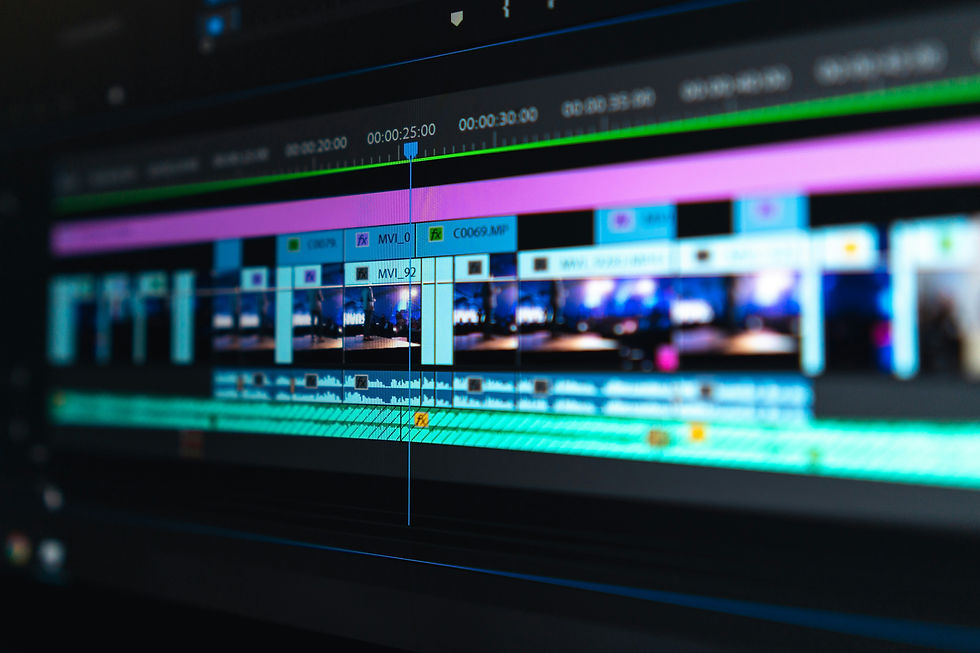
Photo by Peter Stumpf on Unsplash
10. Budget for the assets you'll actually use
A long-form culture video that lives on an internal portal will get a few hundred views. The same shoot can produce LinkedIn cuts, Instagram pieces, stills for the careers page, and short clips for internal communications — and these will collectively be seen far more than the flagship.
Brief the crew for the full asset list at the start. The marginal cost of cutting a thirty-second LinkedIn version from the same footage is small. The cost of going back for it later is enormous. This is true of any photography and videography engagement in Sri Lanka — the brief is where you protect your budget, not the invoice.
You don't need a flown-in crew to make a culture video that feels honest, looks good, and serves your global brand standards. What you need is a tightly scoped brief, a small experienced local team, enough time on the ground to capture the office at different moods, and an edit that doesn't get death-by-revisions. Done well, a locally produced culture video out of Colombo will hold its own next to anything coming out of your other regional offices — at a fraction of the cost and a fraction of the carbon footprint.
Feel free to reach out to us, to see how we can help you with your photography in Sri Lanka and videography-related content requirements. Clear is a well-known Video Production house that provides Commercial Production services.


Comments